理解 JavaScript 中 this 的上下文机制
掌握 bind()、call() 和 apply() 三种函数绑定方法的使用场景与区别
了解箭头函数对 this 绑定的特殊处理方式
能够在实际开发中正确控制函数执行上下文
在 JavaScript 中,函数绑定 是指将一个函数与其特定的执行上下文(即 this 值)关联起来的过程。
关键概念:
this 绑定:JavaScript 函数总是在某个上下文中执行。默认情况下,在非严格模式下 this 指向全局对象(如浏览器中的 window),在严格模式下则为 undefined。
永久绑定:使用 bind() 方法绑定后的函数,无论以何种方式调用,其 this 始终指向绑定时指定的对象。
部分应用(Partial Application):bind() 还支持预设部分参数,生成一个新的“部分应用”函数。
示例:未绑定导致的问题
const person = {
    name: 'Coder',
    greet: function() {
        console.log('Hello, ' + this.name);
    }
};

const greet = person.greet;
greet(); // 输出:Hello, undefined原因分析:当
greet被赋值给变量后独立调用时,它脱离了person对象的上下文,this不再指向person,因此this.name为undefined(严格模式下)或全局对象的name(非严格模式下,通常为空)。
bind()创建绑定后的新函数
bind() 不会立即执行函数,而是返回一个新函数,该函数的 this 被永久绑定到指定对象。
const person = {
    name: 'Coder',
    greet: function() {
        console.log('Hello, ' + this.name);
    }
};

const greet = person.greet;
const boundGreet = greet.bind(person);
boundGreet(); // 输出:Hello, Coder适用场景:事件处理器、回调函数、需要延迟执行但保持上下文的场合。
call()立即调用并指定 this
call() 立即执行函数,第一个参数为 this 的值,后续参数依次传入。
const person = {
    name: 'Coder',
    greet: function(city) {
        console.log('Hello, ' + this.name + ' from ' + city);
    }
};

person.greet('Beijing');           // 直接调用
const greet = person.greet;
greet.call(person, 'Shanghai');   // 使用 call 绑定 this 并传参
输出:
Hello, Coder from Beijing
Hello, Coder from Shanghai适用场景:临时借用其他对象的方法,或需要动态设置上下文并立即执行。
apply()类似 call(),但参数以数组形式传入
apply() 与 call() 功能相同,区别仅在于参数传递方式:apply 接收一个参数数组。
const person = {
    name: 'Coder',
    greet: function(city, country) {
        console.log('Hello, ' + this.name + ' from ' + city + ', ' + country);
    }
};

person.greet('Beijing', 'China');
const greet = person.greet;
greet.apply(person, ['Shenzhen', 'Guangdong']);
输出:
Hello, Coder from Beijing, China
Hello, Coder from Shenzhen, Guangdong适用场景:当你已经有一个参数数组(如 arguments 或 Array.from(...) 的结果)时,使用 apply 更方便。
this 绑定箭头函数没有自己的 this!
它会继承外层作用域的 this 值(词法作用域),这使得在某些场景下无需手动绑定。
const person = {
    name: 'Coder',
    greet: function() {
        const arrowGreet = () => {
            console.log('Hello, ' + this.name);
        };
        arrowGreet();
    }
};

person.greet(); // 输出:Hello, Coder原理说明:
arrowGreet是箭头函数,它的this来自外层greet方法的上下文。而greet是作为person.greet()调用的,因此this指向person。
注意:正因如此,不要在对象方法中使用箭头函数作为主方法,否则 this 会指向定义时的外部作用域(通常是全局),而非对象本身。
// ❌ 错误示例
const badPerson = {
    name: 'Coder',
    greet: () => {
        console.log('Hello, ' + this.name); // this 指向全局,name 为 undefined
    }
};
badPerson.greet(); // Hello, undefined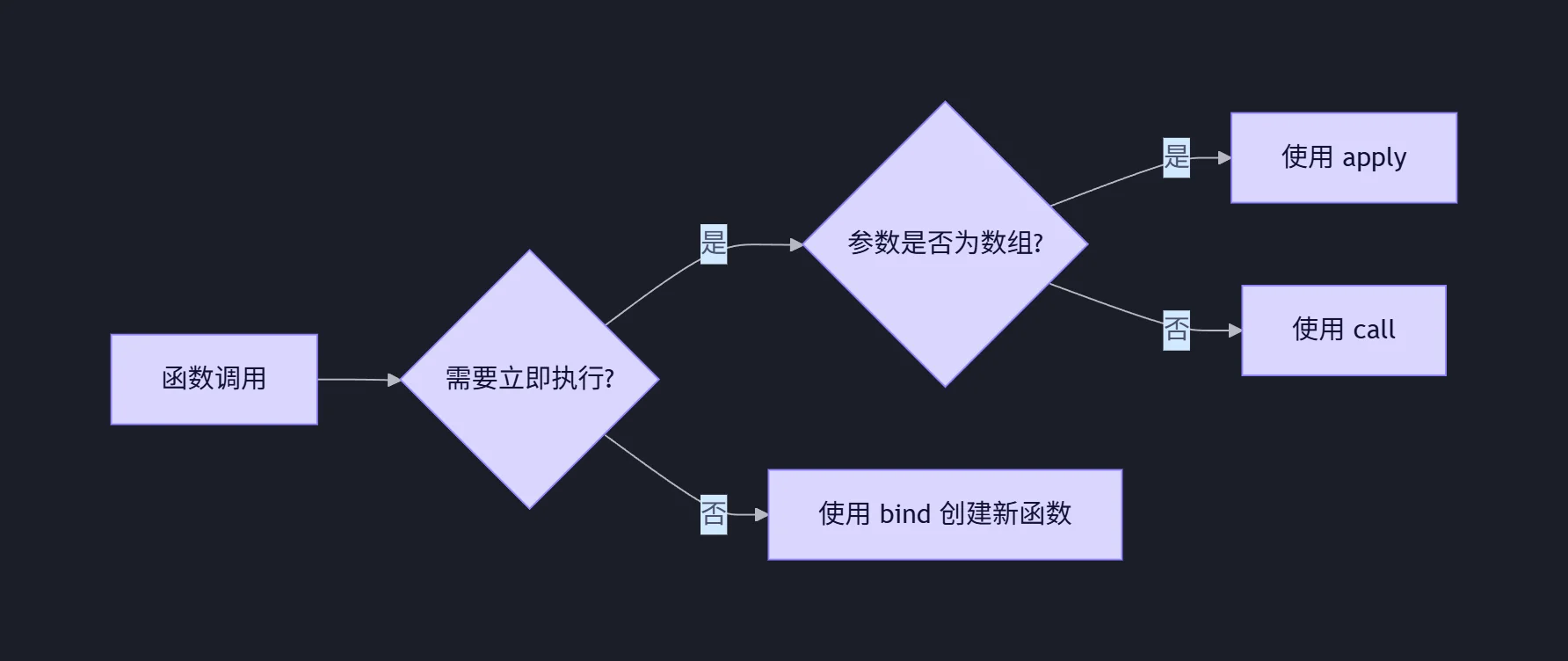
this 的值取决于函数如何被调用,而非如何定义。
bind() 返回新函数,不执行;call()/apply() 立即执行。
箭头函数没有自己的 this,继承自外层作用域。
在类方法、事件监听器、定时器回调中,常需使用 bind() 防止 this 丢失。
apply 特别适合配合 Math.max、Array.prototype.push 等接受多个参数的函数使用。
为什么在 React 类组件中,事件处理函数通常需要在构造函数中使用 this.handleClick = this.handleClick.bind(this)?
如果你有一个函数 fn(a, b, c),现在有一个数组 args = [1, 2, 3],如何用 apply 调用它?如果改用 bind,又该如何实现延迟调用?
在以下代码中,arrowFunc 中的 this 指向谁?为什么?
const obj = {
    value: 42,
    method: function() {
        setTimeout(() => {
            console.log(this.value);
        }, 100);
    }
};
obj.method();